
The March 2026 PhD call has been closed! Please note that it is not possible to apply anymore! Stay tuned to future PhD calls on phdpositionswetsus.eu.
Mapping the Mains: AI-assisted Monitoring of Drinking Water Networks
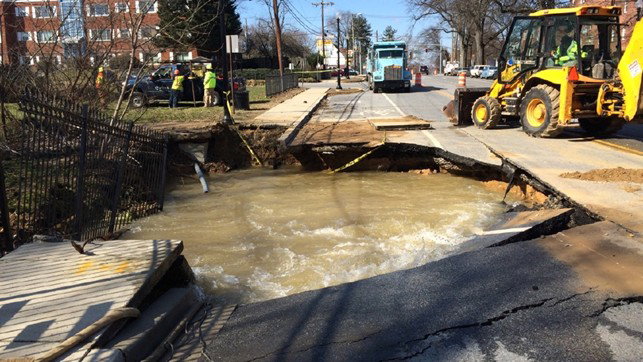
Drinking water networks are critical infrastructures that ensure reliable water supply. However, aging pipelines are increasingly exposed to stresses such as pressure surges, ground movement, construction activities, vegetation growth and changing weather conditions. These factors increase the risk of leaks and pipe bursts, leading to water losses, service disruptions and higher operational costs. In parts of the Netherlands, water availability is becoming constrained, increasing the urgency to reduce losses and improve asset management. Current leak detection methods are often reactive and utilities still lack continuous insight into the condition and failure risk of their networks. Within the Wetsus Smart Water Grids program, this project aims to support a transition from reactive leak detection to proactive monitoring of drinking water infrastructure by developing integrated, physics-informed data-driven methods that provide early insight into pipe failure risk.
Research challenges
Despite increasing data availability, there is still lack of integrated approaches to understand how multiple stress factors jointly influence the failure risk of water mains. Operational hydraulic data, environmental information, asset records, and observations from modern sensing technologies are often heterogeneous and difficult to combine. Important research challenges include identifying relationships between hydraulic operations, environmental conditions, and observed pipe failures, and interpreting indirect observations from remote sensing platforms such as drones and satellites. Another challenge is linking these observations to physical processes affecting pipes in the subsurface. Innovation opportunities lie in combining physics-based knowledge with AI-assisted data analysis and data fusion techniques. By integrating multiple data sources and sensor observations with hydraulic models and digital twins, new predictive tools can be developed to identify increasing failure risks and support proactive monitoring and maintenance strategies for drinking water networks.
Your assignment
You will develop innovative methods to detect and predict failure risks in drinking water distribution and transport networks. You will combine operational hydraulic data, asset information and environmental data, and explore how these factors relate to pipe failures. In addition, you will investigate the potential of sensing technologies on moveable platforms, such as drones or satellites, to detect anomalies that may indicate the onset of a defect or soil disturbances around pipelines. Your work will include data analysis, (AI) model development and validation through case studies, experiments or pilot studies together with water utilities and industrial partners.
Your profile
You have an MSc degree in systems and control, data science, machine learning, civil engineering, water technology, environmental engineering or a related field..
You are interested in combining data analysis, AI and physical system understanding.
You enjoy interdisciplinary research in a very social environment and working with real-world data, finding solutions for real problems.
You are fluent in English, and an official English‑language certificate is required as specified by Wageningen University (see https://www.wur.nl/en/education/phd-programme/required-documents).
Keywords: Water infrastructure; AI-assisted data analysis; smart water grids; remote sensing; asset management
Professor/University group/Wetsus supervisor(s):
University promotor and co-promotor: prof. dr. Peter van Heijster (WUR) , Ass. Prof. Xiaodong Cheng (WUR),
Wetsus supervisor(s): dr.ir. D.R.Yntema,
Project partners: Smart water grids – Wetsus
Only applications that are complete, in English, and submitted via the application webpage before the deadline will be considered eligible.
Guidelines for applicants: https://www.phdpositionswetsus.eu/guide-for-applicants/
The March 2026 PhD call has been closed! Please note that it is not possible to apply anymore! Stay tuned to future PhD calls on phdpositionswetsus.eu.